
中

The wave of regenerative medicine is surging forward. Induced pluripotent stem cell therapy, with its immense application potential and a continuous stream of breakthrough achievements, is rapidly becoming the hottest field in the global medical sector.
Recently, exciting progress has been made in this cutting-edge field - not only has it opened up new paths for the treatment of intractable diseases, but it has also injected strong impetus into the development of regenerative medicine as a whole, making the hope of overcoming difficult diseases increasingly clear.
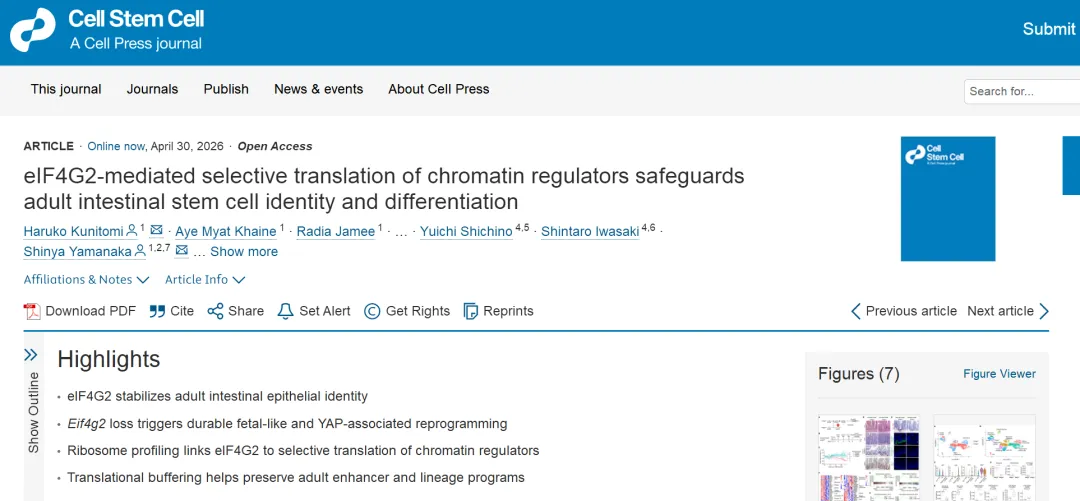
Cell Stem Cell | The Shinya Yamanaka team makes a major breakthrough: Selective Translation - The Secret Guardian of the Fate of Intestinal Stem Cells
Recently, a joint research team led by Professor Shinya Yamanaka, the Nobel laureate in Physiology or Medicine, from the Gladstone Institute in the United States and the iPS Cell Research Center (CiRA) of Kyoto University, published their latest research findings online in the top international stem cell journal "Cell Stem Cell". They revealed for the first time the core mechanism by which the non-classical translation initiation factor eIF4G2, through selective translation of chromatin regulatory factors, precisely maintains the homeostasis of adult intestinal stem cells and prevents their abnormal reprogramming into a fetal-like regenerative state.
This discovery has overturned the traditional belief that "the fate of stem cells is solely determined by transcriptional and epigenetic regulation", opening up a new direction for research on tissue regeneration, intestinal diseases, and the mechanisms of tumor formation.
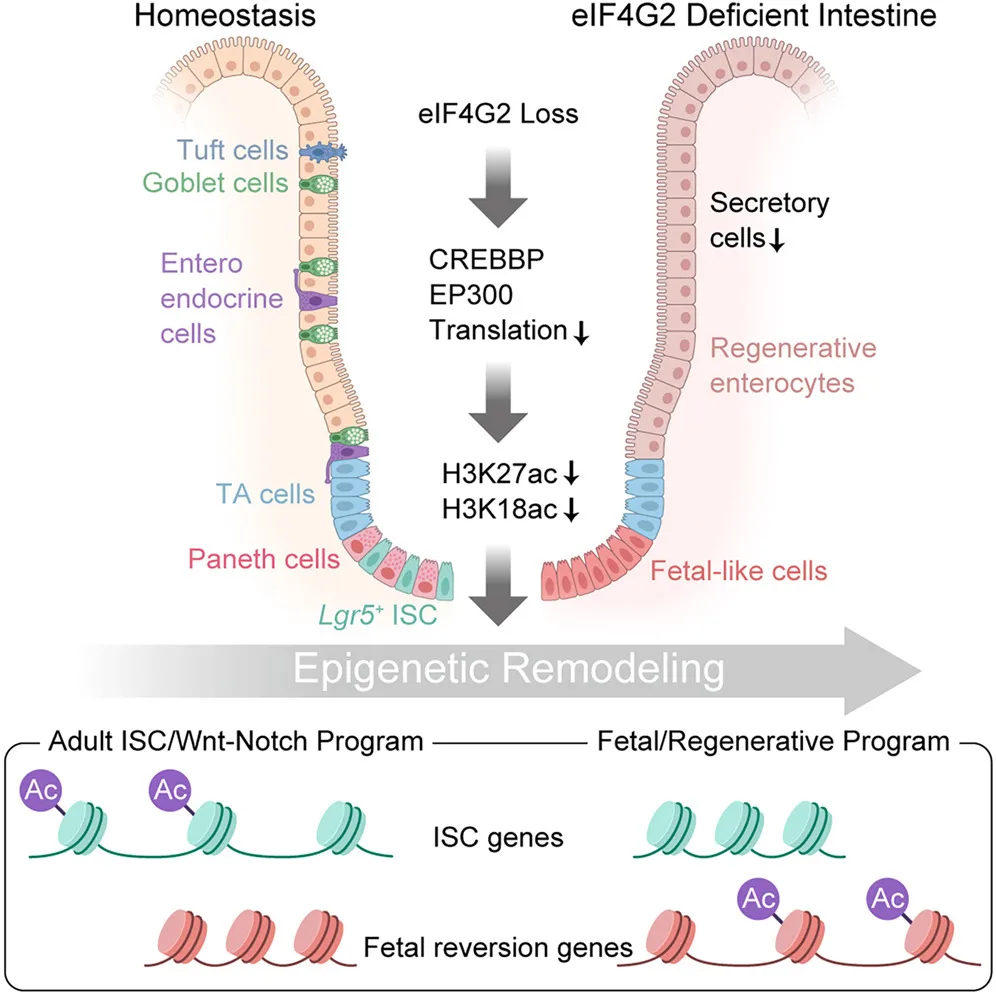
Graphical summary
01 The overlooked regulatory level: The crucial role of translation selectivity
成体组织干细胞的核心使命,是在日常稳态维持与损伤修复之间实现精准平衡。长期以来,科学界普遍认为这一过程主要受转录水平的基因表达调控和表观遗传修饰的双重控制。然而,山中伸弥团队的最新研究表明,选择性翻译作为一种长期被低估的调控层级,在肠道干细胞(ISC)身份维持中扮演着不可替代的核心角色。
研究团队将目光聚焦于非经典翻译起始因子eIF4G2。与传统翻译因子普遍调控所有蛋白合成的功能不同,eIF4G2具有高度的 “翻译选择性”—— 它并非无差别地促进mRNA翻译,而是优先识别并翻译一类对剂量极其敏感的染色质调控因子,其中最关键的是组蛋白乙酰转移酶CREBBP和EP300。
这种选择性翻译机制形成了一种独特的 “翻译缓冲” 效应:通过精准调控染色质调控因子的蛋白合成量,稳定维持成体肠上皮细胞特有的增强子活性,确保谱系特异性基因表达程序能够稳定运行,从而牢牢锁定肠道干细胞的成体身份。
02 eIF4G2 deficiency: "Reversal of fate" of intestinal stem cells
To verify the function of eIF4G2, the research team constructed a mouse model with inducible knockout of the eIF4G2 gene. They combined multi-omics techniques such as single-cell transcriptome sequencing, chromatin accessibility sequencing (ATAC-seq), and ribosome sequencing (Ribo-seq) to systematically analyze the molecular changes in intestinal stem cells after the deletion of eIF4G2.
The research results are astonishing: Once the expression of eIF4G2 is absent, the characteristic genes of adult intestinal stem cells will be rapidly downregulated. The cells no longer maintain their normal stem cell identity but undergo a profound fate reprogramming, transforming into a stable "fetal-like regenerative state". This state is not a temporary stress response but has formed a persistent alternative epithelial state.
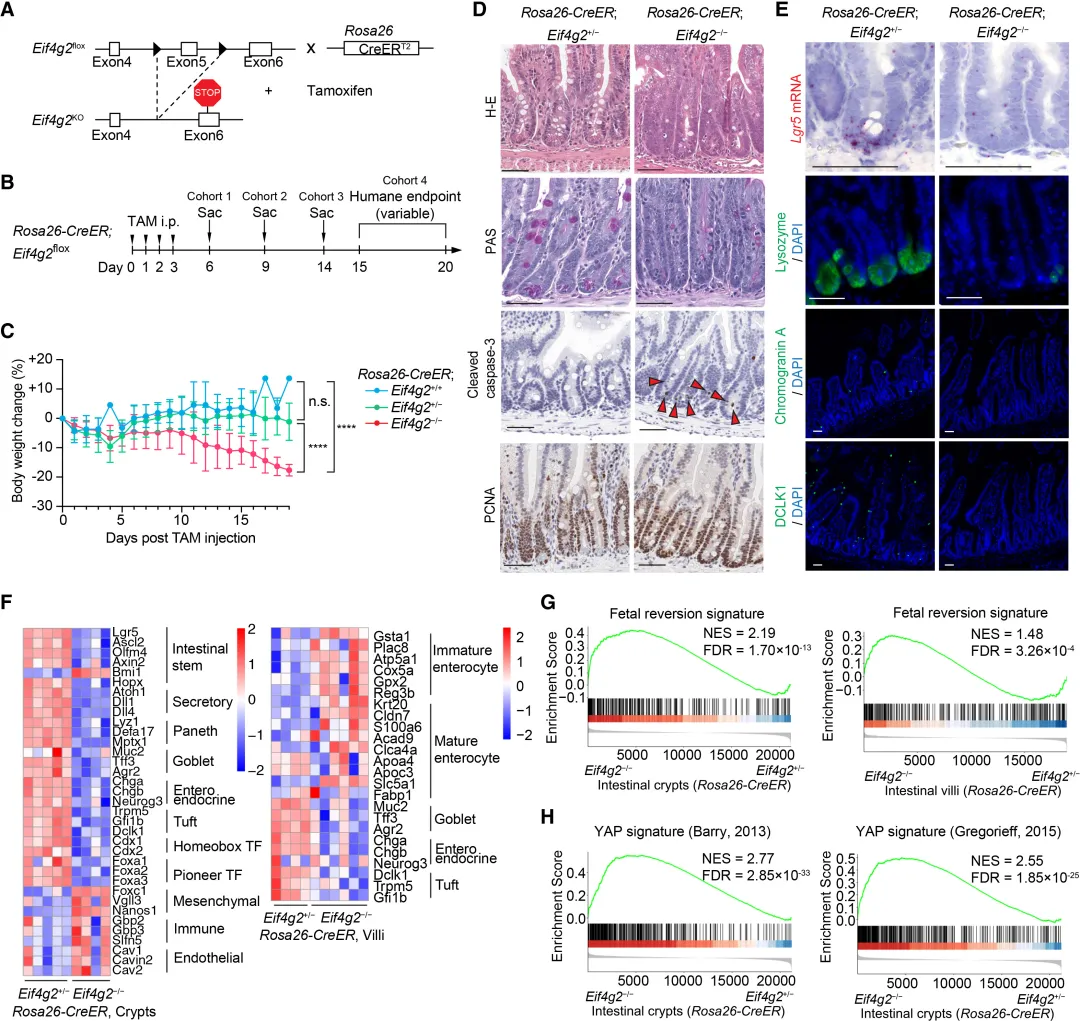
The intestinal tract of Eif4g2 knockout mice lost the Lgr5+ mesenchymal stem cells and instead exhibited a regenerative state similar to that of the fetal period, associated with YAP.
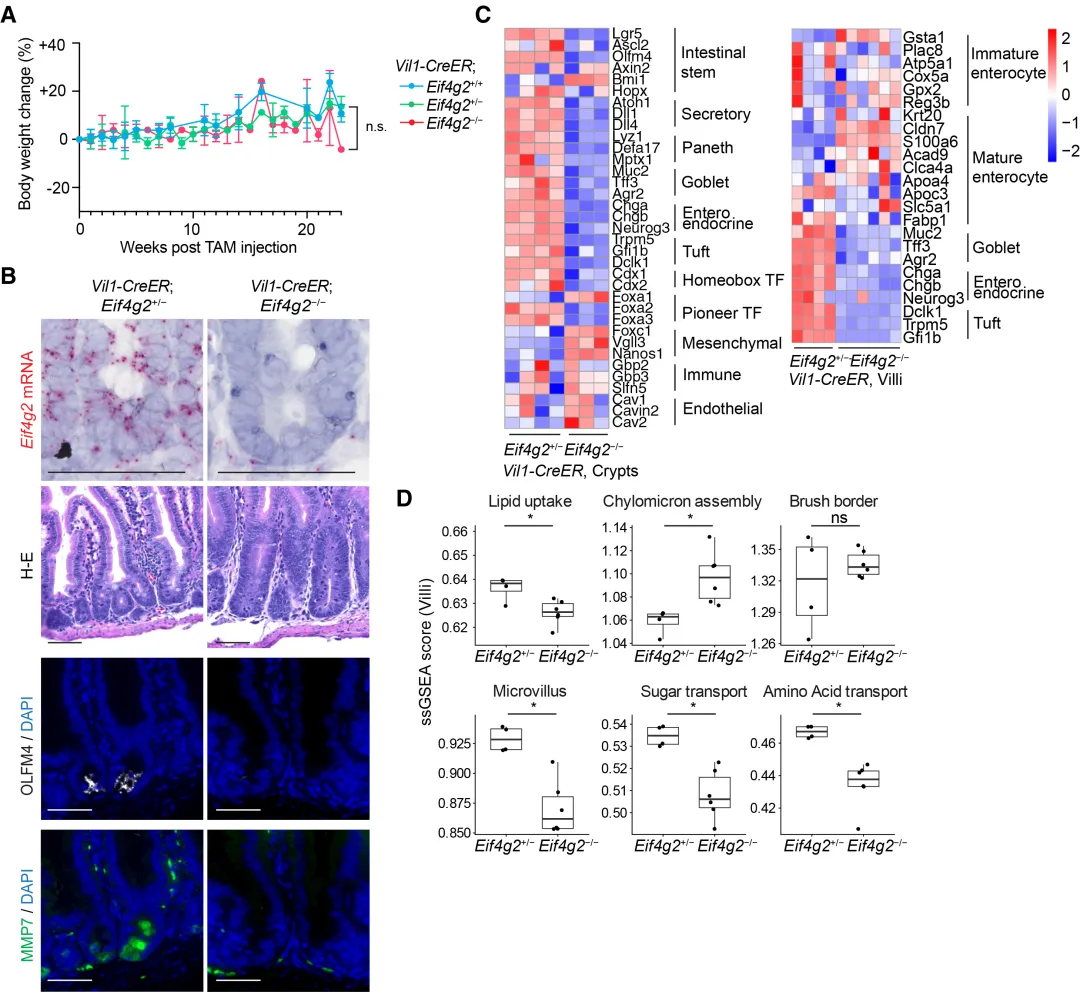
The fetal reversal caused by Eif4g2-KO is a persistent state.
From the perspective of molecular mechanisms, the absence of eIF4G2 directly leads to a significant decrease in the protein synthesis of CREBBP and EP300, thereby causing a reduction in the modification levels of histone H3K27ac and H3K18ac throughout the genome. This epigenetic remodeling results in two key consequences:
The enhancers related to adult intestinal stem cells have been extensively "defunctionalized", and the adult-specific gene expression programs have been shut down.
2. The regulatory networks related to fetal development and tissue regeneration were abnormally activated. The YAP signaling pathway was significantly upregulated, and the overall openness of the chromatin promoter regions increased.
This transformation of fate ultimately disrupts the normal differentiation process of the intestinal epithelium: the maturation of secretory cell lines (including goblet cells, Paneth cells, endocrine cells and cluster cells) is severely inhibited, while a large number of fetal-like intestinal epithelial cells with regenerative properties proliferate, resulting in impaired intestinal absorption and barrier function.
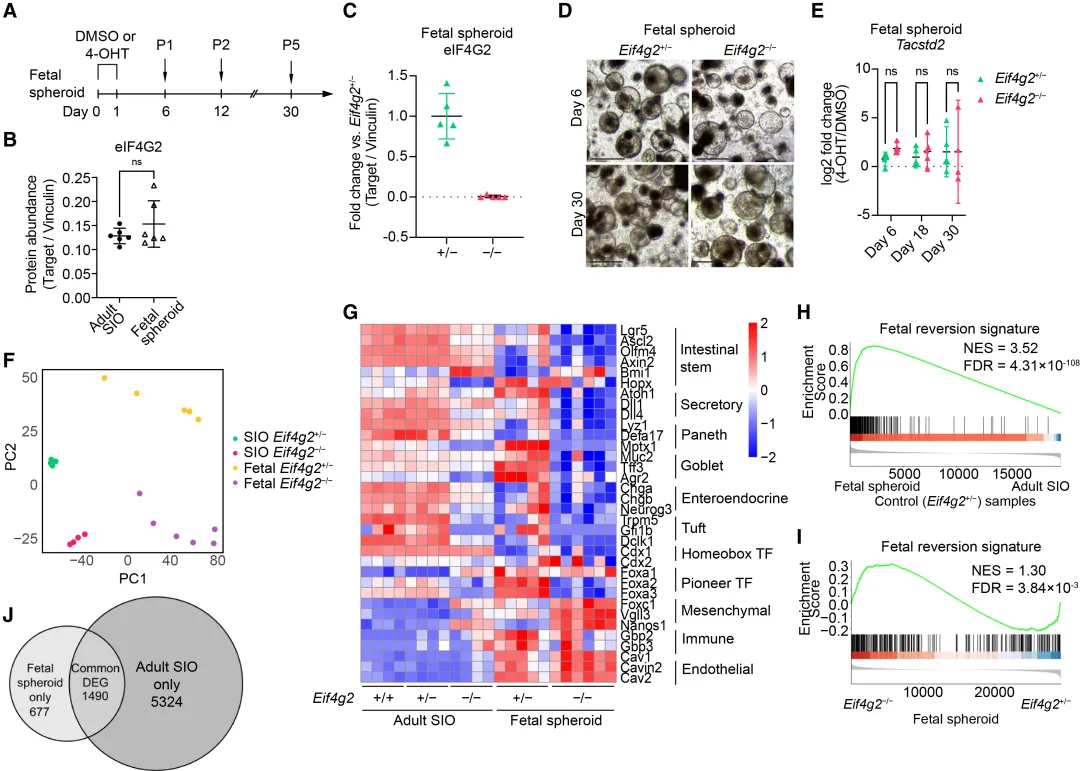
The fetal sphere can still grow and multiply even in the absence of eIF4G2.
The most groundbreaking significance of this research lies in that it completely overturns the traditional view that "translation regulation is merely a passive responder to transcriptional changes". The team of Shinya Yamanaka demonstrated that translation regulation can actively shape the chromatin state of cells by prioritizing the protein synthesis of key epigenetic factors, thereby determining the fate of the cells.
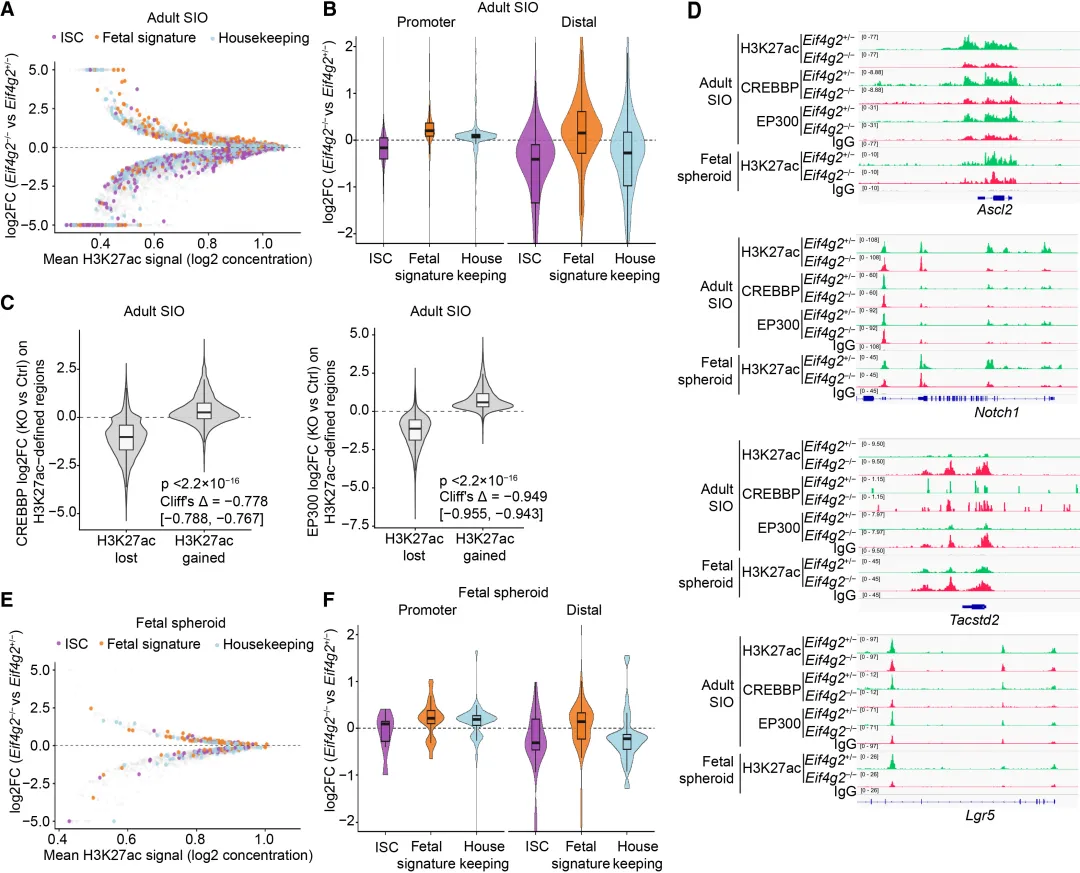
The absence of eIF4G2 will reshape the active chromatin structure and redistribute the distribution of KAT3 co-activating factors.
Summary
The research conducted by the team of Shinya Yamanaka once again demonstrates the complexity and sophistication of the stem cell regulatory network. From the establishment of the iPS cell technology to the discovery of the core role of selective translation, human understanding of cell fate regulation is continuously deepening. In the future, with the further advancement of research on translation regulatory mechanisms, we are expected to develop more precise stem cell regulatory technologies, bringing revolutionary breakthroughs to regenerative medicine and disease treatment.