
中

Recently, a series of key events in the global regenerative medicine field have occurred simultaneously, and China has made several landmark achievements in this field. From the first domestically approved stem cell drug being included in local commercial supplementary medical insurance, to the conditional approval of the world's first iPSC-derived therapy Amchepry in Japan and its recent inclusion in the medical insurance, and then to the conditional listing application of the second stem cell drug in China being accepted by the National Medical Products Administration, all these events jointly indicate that stem cell therapy is transitioning from the clinical research stage to large-scale clinical application, providing new treatment options for patients with various intractable diseases.
The first domestically-made stem cell drug has been included in Beijing's "Comprehensive Health Insurance Plan":
The price is significantly lower than that of similar products in the international market, with the maximum compensation ratio reaching 65%.
In May 2026, the "Beijing Affordable Health Insurance" for 2026 was officially launched. The first stem cell drug in China to be approved for conditional listing - Amymetosetase Injection (trade name: Ruibolisheng) - was included in the specific drug list of this insurance. For insured patients using this drug at designated medical institutions, the expenses that meet the reimbursement conditions can be compensated at a maximum rate of 65%, which to some extent reduces the economic burden on patients.
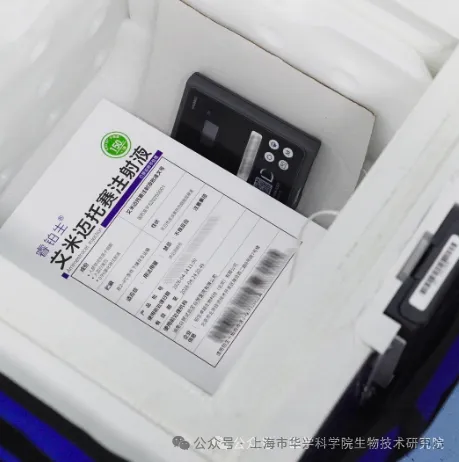
The picture is from "Institute of Biotechnology, Academy of Medical Sciences"
The Amymetosetase Injection was conditionally approved for market release by the National Medical Products Administration on January 2, 2025. It is the first stem cell therapy product approved in China. This product is a human umbilical cord mesenchymal stem cell injection, and the approved indication is for the treatment of acute graft-versus-host disease (aGVHD) with digestive tract involvement in patients aged 14 and above who have not responded to hormone therapy.
Acute graft-versus-host disease (aGVHD) is one of the serious complications following allogeneic hematopoietic stem cell transplantation. It is caused by the immune cells from the donor attacking the recipient's tissues and organs. Patients with digestive tract involvement may present with severe diarrhea, bloody stools, intestinal mucosal damage and other clinical manifestations. Currently, there are limited effective treatment options for patients with steroid-resistant severe aGVHD, and their prognosis is poor. Aimetisib inhibits the excessive activation of donor T cells through immunomodulatory mechanisms and promotes the repair of damaged tissues, providing a new treatment option for such patients.
The world's first iPSC-derived therapy has been approved and included in Japan's medical insurance system:
The price is approximately 2.38 million yuan.
In March 2026, the Ministry of Health, Labour and Welfare of Japan announced that the world's first induced pluripotent stem cell (iPSC) derived therapy, Amchepry, received conditional approval for market launch. In May of the same year, this therapy was included in the Japanese national medical insurance directory. The total cost of a single-person treatment was 55,306,737 yen (approximately 2.38 million yuan in RMB), and it is expected to be put into clinical application in the autumn of 2026.

Amchepry was developed by Sumitomo Pharmaceutical and is used to treat Parkinson's disease. The main pathological feature of Parkinson's disease is the progressive degeneration and loss of dopaminergic neurons in the substantia nigra of the midbrain, which leads to motor dysfunction in patients. The mechanism of action of Amchepry is to induce the differentiation of human iPSCs into dopaminergic neural precursor cells, and then inject and transplant them into the striatum region of the patient's brain to replace the damaged dopaminergic neurons and exert their functions. This therapy is mainly applicable to patients with Parkinson's disease who do not respond well to conventional drug treatments such as levodopa.
Also, in March of this year, another iPSC-derived therapy, ReHeart, which was conditionally approved, was developed by Cuorips and is used to treat severe heart failure caused by ischemic cardiomyopathy. The pricing and insurance coverage of ReHeart are expected to be announced in the summer of 2026.
Our country's second stem cell drug has submitted an application for conditional market approval:
It is intended for the treatment of systemic sclerosis.
On May 21, 2026, the official website of the Drug Evaluation Center of the National Medical Products Administration (CDE) announced that the conditional marketing application for "RY_SW01 Cell Injection" submitted by Jiangsu Ruiyuan Biotechnology Co., Ltd. has been accepted (acceptance number: CXSS2600086). If approved smoothly, this product will become the second stem cell therapy product to be marketed in China.
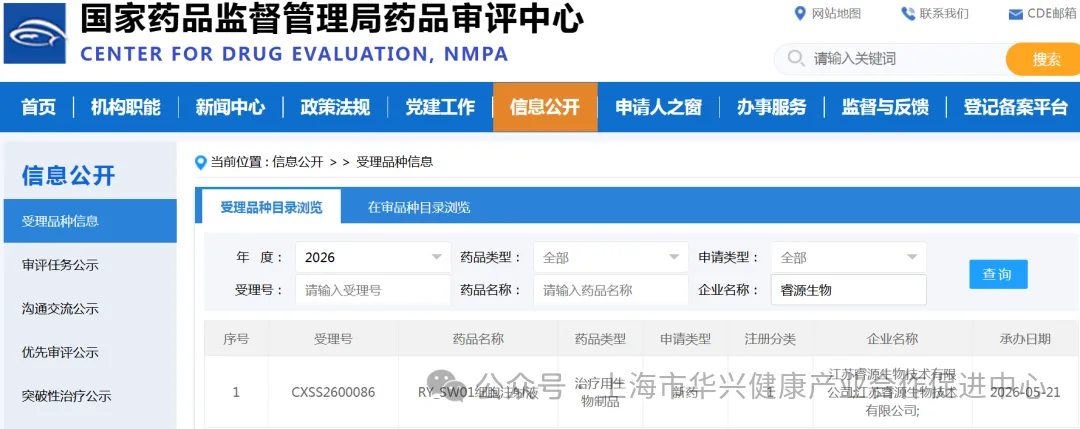
According to the publicly available clinical trial information, the indication for RY_SW01 as declared this time is systemic sclerosis (SSc). Systemic sclerosis is a rare autoimmune disease characterized mainly by progressive fibrosis of the skin and internal organs. It can affect multiple organs such as the lungs, heart, and kidneys. Currently, there is no cure for this disease.
RY_SW01 is a human umbilical cord mesenchymal stem cell preparation, possessing biological activities such as immune regulation, anti-inflammatory and anti-fibrotic effects. The results of the completed clinical trials show that this product demonstrates certain efficacy in improving the clinical symptoms of patients with systemic sclerosis, and the overall safety is good.
Previously, RY_SW01 has obtained approval from the National Medical Products Administration to conduct registration clinical trials for three indications: active lupus nephritis, systemic sclerosis, and type 2 diabetic nephropathy. In the future, it is expected to further expand its clinical application scope.
Summary
From the approval of the first domestically produced stem cell drug to the submission of the application for the second product for market launch, China has established certain industrial advantages in the field of mesenchymal stem cell therapy. The successful approval of the iPSC therapy in Japan has also provided important references for the regulation and commercialization development of regenerative medicine worldwide.
With the continuous advancement of technology and the gradual improvement of the regulatory system, more stem cell therapy products will be approved for market launch in the future, covering multiple treatment areas such as autoimmune diseases, neurodegenerative diseases, and cardiovascular diseases, bringing treatment hope to more patients with intractable diseases.